Summer Sod Care: Keep Your Lawn Lush and Green
Lawn Care, Summer Sod Maintenance
How to Take Care of Fresh Sod in the Heat of the Summer
Laying fresh sod in the middle of summer can instantly transform a bare yard into a lush green space—but hot weather also puts that new lawn under serious stress. With the right care in the first few weeks, you can help your sod establish strong roots and survive even the most intense heat waves.
Why Summer Heat Is Tough on Fresh Sod
Freshly installed sod is like a plant in a small pot that has just been moved into the ground. It has a thin layer of soil and a shallow root system, so it dries out far faster than an established lawn. In the heat of summer, intense sun, high temperatures, and drying winds can cause the sod to overheat and lose moisture in a matter of hours. Your main job in the first few weeks is to keep the sod cool, evenly moist, and undisturbed while the roots grow down into the soil below.
Watering Schedule: The First Critical Weeks
In summer heat, watering is the single most important part of caring for new sod. The goal is to keep the sod and the top inch or two of soil consistently damp, but not a muddy swamp. Overwatering can suffocate roots; underwatering can kill the sod in a day or two of extreme heat.
Days 1–3: Heavy, frequent watering
Right after installation, water the sod thoroughly until the water soaks through the sod layer and into the soil beneath. In hot weather, you may need to water 2–4 times per day, especially in full sun. Each session should be long enough that lifting a corner of sod reveals cool, damp soil underneath.Days 4–10: Maintain consistent moisture
As roots begin to knit into the soil, you can gradually reduce frequency but increase depth. Aim for 1–2 deep waterings per day, depending on temperature, wind, and sun exposure. The sod should never look dry, curl at the edges, or turn a dull grayish-green between waterings.Days 11–21: Transition to a regular schedule
Once the sod resists when you gently tug on it, roots are anchoring. Now you can begin moving toward a normal lawn schedule: fewer, deeper waterings every 1–2 days, depending on your climate. Deep watering encourages roots to grow down instead of staying near the surface.
💡 Pro Tip: Always water early in the morning and, if needed, again in late afternoon. Avoid midday watering when the sun is strongest; much of the water will evaporate before it can soak in.
Keeping Sod Cool and Preventing Burn in Extreme Heat
When temperatures climb above the mid-80s, fresh sod can overheat quickly. Signs of heat stress include bluish or gray patches, curled edges, and footprints that stay visible when you walk across the lawn. To protect your investment during heat waves, combine smart watering with a few extra precautions.
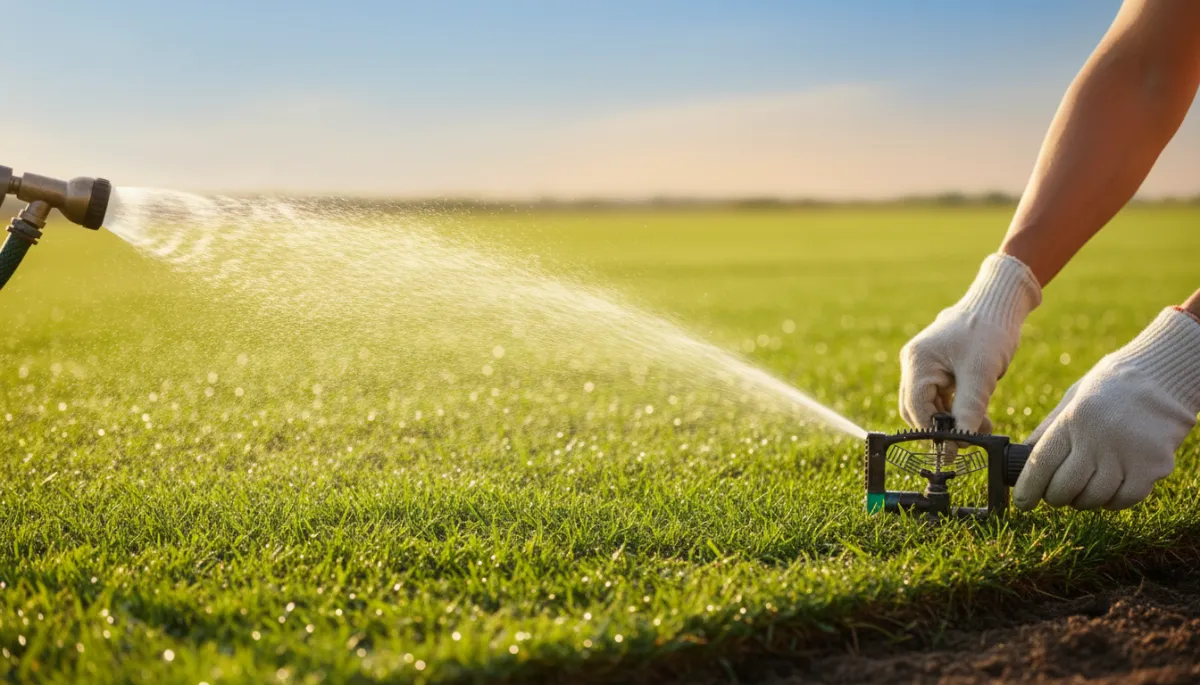
Use gentle, even coverage. A sprinkler or soaker hose is better than a strong jet from a hose nozzle, which can displace soil and create dry spots. Overlap sprinkler patterns so no area is missed.
Watch sunny and sloped areas closely. Sections that face south or west, or sit on a slope, dry out first. You may need to spot-water these areas more often than the rest of the yard.
Avoid standing water. If puddles form, reduce the run time and water in shorter, repeated cycles so the soil can absorb the moisture without becoming saturated.
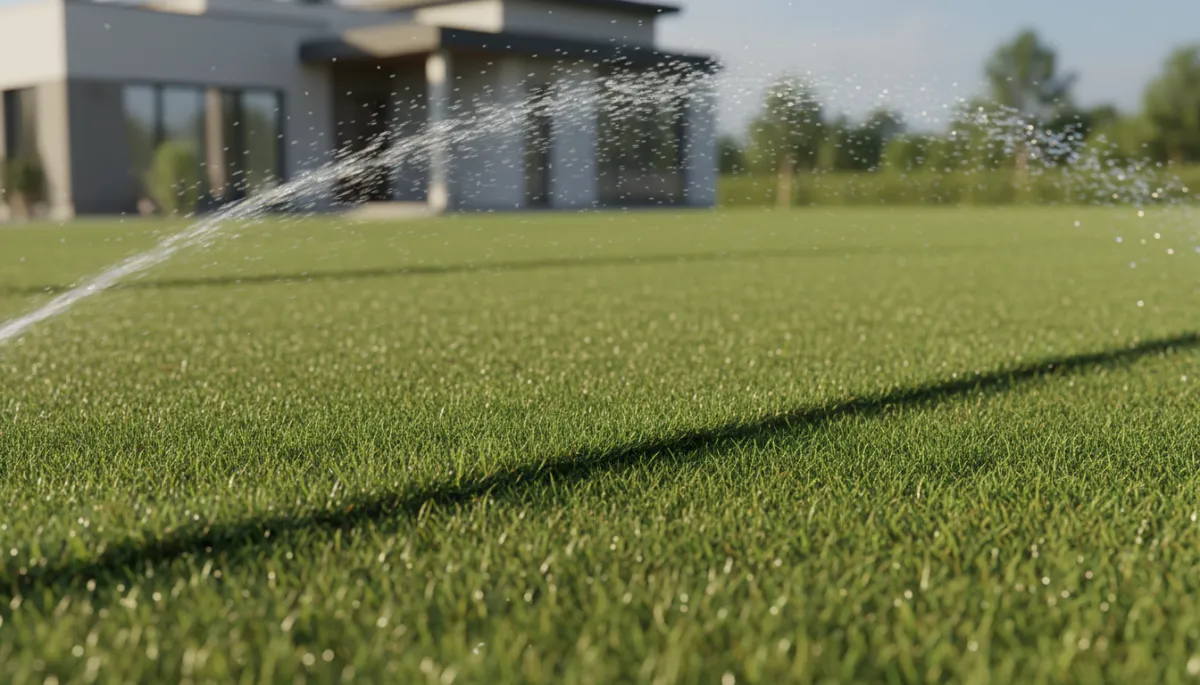
Even, gentle watering helps seams knit together and prevents dry, patchy spots.
Foot Traffic, Mowing, and Fertilizing: What to Avoid at First
Fresh sod might look like a finished lawn, but it is still fragile beneath the surface—especially in summer. Too much activity can damage roots before they have a chance to establish.
Limit foot traffic. For the first two weeks, walk on the sod only when necessary for watering or inspection. Keep kids, pets, and heavy items like grills or furniture off the new lawn to avoid creating ruts or gaps between the sod pieces.
Wait to mow. Do not mow until the sod is firmly rooted and has grown at least 3–4 inches tall. When you do mow for the first time, set the mower to a high setting and remove only the top third of the grass blades. Taller grass shades the soil and helps keep roots cooler in summer.
Hold off on fertilizer. Most quality sod is already fertilized before harvest. Adding more fertilizer in the heat can burn tender roots. Wait at least 4–6 weeks before applying a balanced, slow-release lawn fertilizer, and always water deeply afterward.
Simple Daily Checks to Catch Problems Early
A few minutes of observation each day can make the difference between a thriving lawn and one that struggles all summer. Walk the perimeter and look for:
Color changes. Healthy sod is a rich, consistent green. Dull, bluish, or yellow patches often signal water issues—either too little or, occasionally, too much.
Gaps between strips. In heat, sod can shrink slightly if it dries out. If you see widening seams, increase watering and gently press edges back together with your foot or a rake.
Soft or spongy areas. Constantly soggy spots may indicate overwatering or poor drainage. Reduce watering time in those zones so roots get oxygen as well as moisture.
Setting Your New Lawn Up for Long-Term Success
Caring for fresh sod in the heat of summer requires extra attention, but the intense early effort is temporary. After the first three to four weeks, your lawn will begin behaving more like an established yard. At that point, you can gradually shift to deeper, less frequent watering, regular mowing, and seasonal fertilizing—just as you would with any mature lawn.
If you stay consistent during those crucial first weeks—watering wisely, limiting traffic, and keeping a close eye on how the sod responds—the payoff is a thick, resilient lawn that can handle summer heat for years to come. Think of it as giving your yard a strong, healthy start, so you can spend the rest of the season actually enjoying your outdoor space instead of fighting to keep it alive.
